
Access-A-Ride proving inadequate for older adults
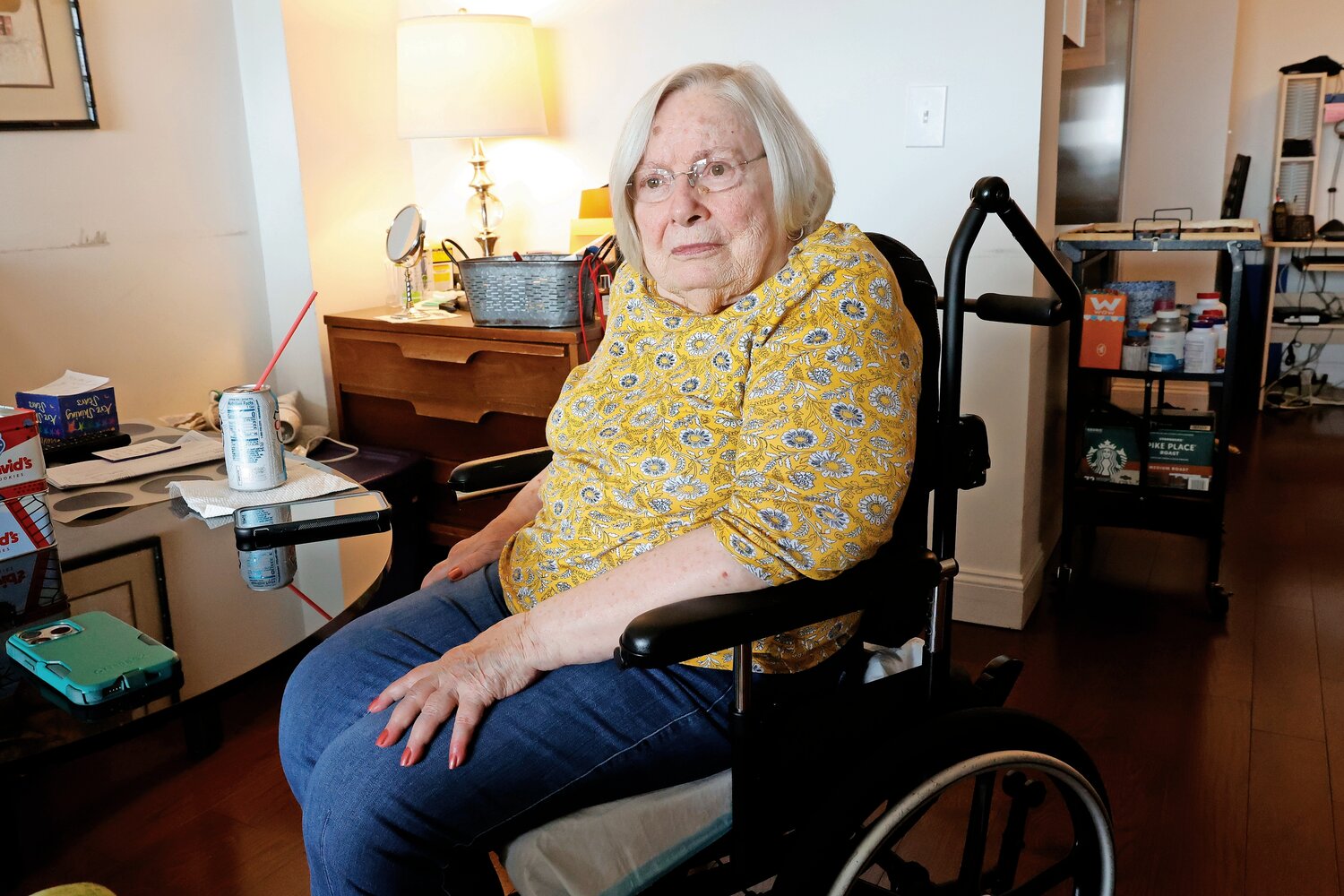


Last month, eighty-six-year-old Ellen Brown waited in her wheelchair inside Riverdale-on-Hudson Funeral Home, the June heat pushing 100 degrees. She had booked an Access-A-Ride to pick her up from her daughter’s wake more than a day in advance.
It never showed.
Brown spent hours in limbo, stuck in a maze of phone calls with customer service before another vehicle was dispatched. Unfortunately, Brown’s experience isn’t unique. Across the greater Riverdale area, older adults face increasingly unreliable transportation services, making it difficult to reach medical appointments, shop for essentials or stay socially connected.
According to Community Board 8, one in five residents in the district is over the age of 65, a 53 percent increase since 2000. For the many seniors who don’t drive and can’t afford private rides, these gaps pose a significant threat to their independence.
“It was surreal,” Brown said. “Like I didn’t matter.”
For years, the board has urged the city to fund new vehicles and expand services that help older adults reach doctors, grocery stores and community centers. For fiscal year 2026, senior transportation needs ranked fifth among the board’s Capital Budget Requests, up from 16th last year.
Although the Metropolitan Transportation Authority operates Access-A-Ride, the New York City Department for the Aging also funds alternative transportation options, like providing rides through a network of Older Adult Centers and Naturally Occurring Retirement Communities, or NORCs.
A NORC is typically a complex where many longtime residents have aged in place.
Among the department’s recipients is Riverdale Senior Services, also known as The Center for Ageless Living, which has a single 16-passenger minibus that is in constant need of repair. It’s not uncommon for the wheelchair lift to fail.
The center’s executive director, Tina Cardoza-Izquierdo, said the lack of a reliable vehicle significantly impacts its members, all aged 50 and up.
“We’ve had to cancel pickups, especially for members who use wheelchairs,” Cardoza-Izquierdo said. “That means they miss our adult day program, they miss a meal and they miss being around other people. For some, this is the only place they go all week.”
In the last fiscal year, Riverdale Senior Services completed 241 round trips. That includes transporting members to and from the center as well as occasional group outings and supermarket runs.
But when the van is at capacity or out of service, there are no alternatives.
The Riverdale Y’s New Beginnings NORC program is in a similar bind. Reserved for adults ages 60 and older, New Beginnings’ offerings are similar to those at Riverdale Seniors Services, including hot meals, transport to doctors’ offices, pharmacies and access to social workers.
New Beginnings director Sharon Asherman told The Press that city funding hasn’t changed in years, even if their expenses have ballooned.
The day program utilizes two vehicles, one 2012 model and the other from 2015, both nearing the end of their usable life. Repairs and fuel now cost more than $10,000 a year. Insurance rates have more than doubled since 2022.
“We haven’t had an increase in our [transportation] budget since 2018,” Asherman said.
The department for the aging lists the cost of a new mini-bus at $75,000. That price is far beyond what either program can afford, particularly with New Beginnings’ need for two new vehicles.
A spokesperson for the department of aging said the total citywide budget for transportation for fiscal years 2024, 2025 and 2026 stands at $262,000.
The effects ripple out quickly. Many who rely on Riverdale Senior Services and New Beginnings live alone, on fixed incomes and cannot navigate the steep hills or crumbling sidewalks of greater Riverdale safely. Even a short walk to the bus stop can be a hazard.
The problem has worsened since the sudden closure of the Knolls Crescent Rite Aid this month, once a critical resource for the neighborhood’s seniors. Now, the closest options, a CVS and Walgreens on Johnson Avenue, are nearly a mile away.
“You try doing that with a walker,” said Ruth Greenfield, a Riverdale resident of more than five decades, and a Riverdale Senior Services member.
Greenfield said she’s seen neighbors fall trying to get around with shopping carts or canes.
She continues to use Access-A-Ride for her medical appointments, but has learned not to depend on it. While undergoing breast cancer treatments, she was often left waiting more than an hour after chemotherapy — exhausted and uncertain when her ride would come.
Now in her 80s, Greenfield said she builds in extra time for every trip, planning around the possibility the van may not arrive at all. The unpredictability, she said, is the most stressful part.
The MTA’s own data reflects that frustration. As of spring 2024, only 64 percent of Access-A-Ride users reported satisfaction with on-time pickups. More than half said reliability and flexibility, including the ability to modify a trip the same day, still need improvement.
The solution, Asherman said, is funding transportation for older adult community centers.
“When our wheelchair lift isn’t working or the van breaks down, people don’t get to go,” she said. “Some of them are scared to take Access-a-ride, and that happens more than people realize.”
For many, staying home means missing more than a class or lunch. It may mean going without the only hot meal of the day, or going days without social interaction.
Riverdale Senior Services offers limited group trips to Trader Joe’s, Walmart and Stew Leonard’s. New Beginnings will sometimes take riders to Ridge Hill in Yonkers or nearby medical offices. But demand far outpaces supply.
Cardoza-Izquierdo worries most during heat waves. In extreme temperatures, if Access-A-Ride runs late or fails to arrive, she said the consequences can be life-threatening.
“Seniors waiting outside in 95-degree heat, often with medical conditions; that’s not a delay, that’s a crisis,” she said.
Public transit is an option for some older adults, but those facing mobility issues still fall through the gaps. However, the city pledged to make more subway stations ADA accessible by 2029, aiming for more than 50 percent compliance. But in greater Riverdale, where subway coverage is limited and hills are steep, that goal feels distant.
Asherman sees it as a matter of dignity.
“When someone loses access to reliable transportation, they lose the ability to live independently,” she said. “It’s not just a ride, it’s their connection to the world.”
As for any hope on the horizon for new vehicles for the senior centers, it is bleak.
“At present, there is capacity for all the transportation providers in the Bronx, including Community District 8,” a spokesperson for the department of aging said. “We encourage older Bronxites to learn more about NYC Aging’s transportation program and other services we provide.”
Ellen Brown now avoids Access-A-Ride whenever she can after being stranded for hours after her daughter’s funeral. The experience shook her confidence in a system that was supposed to support her.
“I was just trying to get home,” she said. “That’s not too much to ask.”
Keywords
Senior transportation crisis, Access-A-Ride failures, Aging population in Riverdale, Mobility and independence, Underfunded community programs, Health and safety risks, Need for reliable transit solutions


