
Clarence B. Jones, former Riverdale resident and ‘I Have a Dream’ speech co-writer, dies at 95
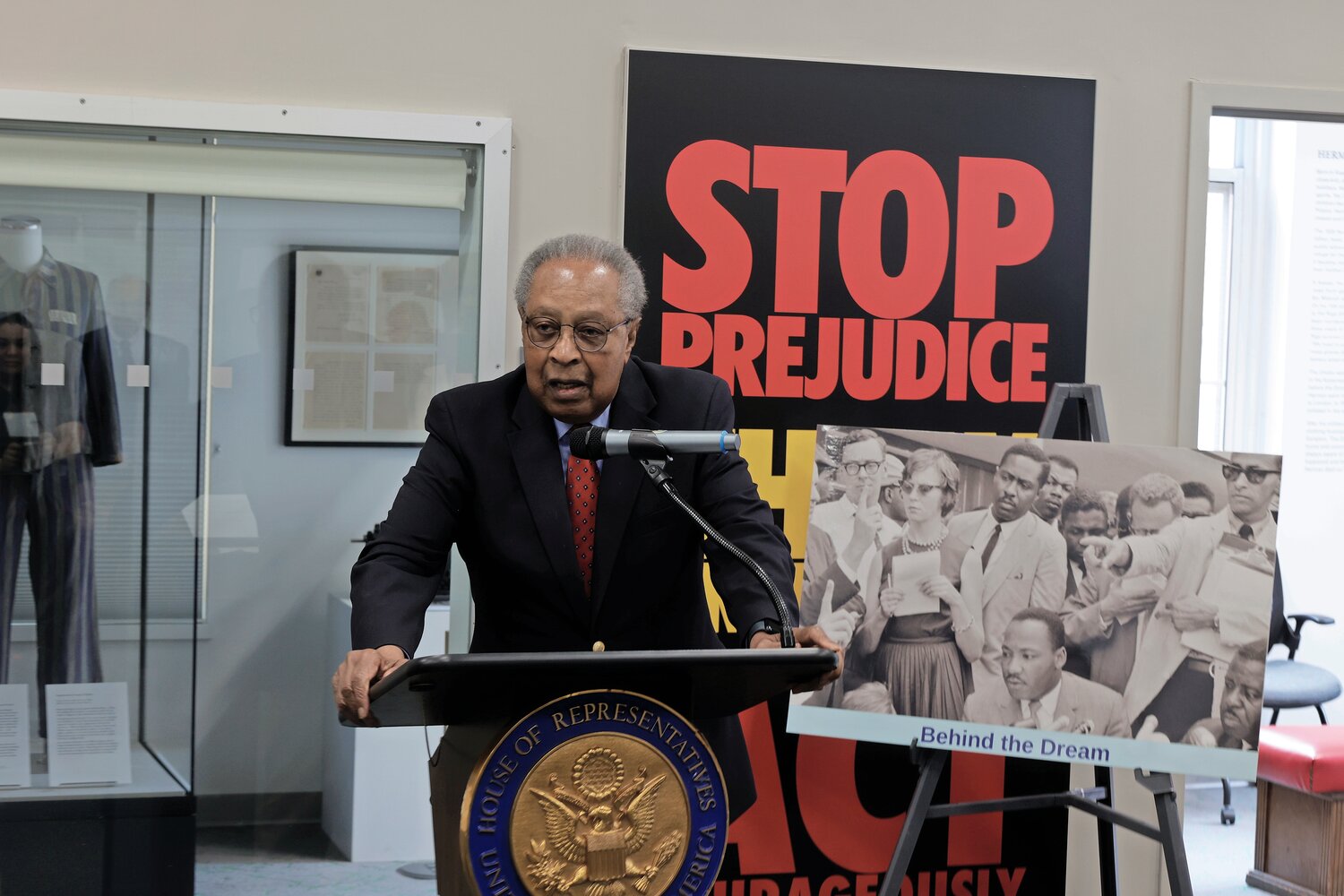
Dr. Clarence B. Jones, the former Riverdale resident who helped the Rev. Dr. Martin Luther King Jr. draft the famed “I Have A Dream” speech and served as one of his closest advisers, died May 22 at 95.
A lawyer, speechwriter and fervent civil rights advocate, Jones’ influence touched some of the defining moments of the civil rights movement, from the March on Washington to the release of King’s “Letter from Birmingham Jail.”
For years, Jones’ work in the civil rights movement bloomed in Riverdale, where his home became both a refuge for King and a behind-the-scenes planning center during preparations for the 1963 March on Washington.
In later writings, Jones recalled the spring of 1963, when King arrived in Riverdale physically and emotionally drained after the Birmingham campaign.
“It was the late spring of 1963, and my friend Martin was exhausted,” Jones wrote in his memoir “Behind the Dream: The Making of the Speech That Transformed a Nation.”
Jones said King hoped for a brief escape from the relentless pressures surrounding him, wanting “nothing more than to take Coretta and the children away for a vacation and forget — forget his looming book deadline, the internal politics of his ever-growing Southern Christian Leadership Conference and the constant need to raise funds.”
But with the March on Washington rapidly approaching, Jones recognized King needed a quiet place to work away from constant interruptions.
“That would be my house in Riverdale, N.Y.,” Jones wrote.
Jones and his family temporarily moved out of their five-bedroom rental near West 254th Street, allowing King to use the home as what they later called his “command post north.”
From Riverdale, King and Jones coordinated plans for the march, speaking with advisers in New York and Atlanta while navigating transportation logistics, security concerns and political tensions surrounding the historic demonstration.
Born in Philadelphia on Jan. 8, 1931, Jones was the son of a chauffeur and a maid who worked for a wealthy New Jersey family.
According to the Clarence B. Jones Institute for Social Advocacy, he displayed an early talent for speechwriting and public speaking, delivering a high school graduation speech in 1949 centered on breaking down racial barriers while serving as valedictorian of his integrated high school in Palmyra, New Jersey.
Jones later graduated from Columbia University before serving in the U.S. Army in 1953. He refused to sign the Armed Forces Loyalty Certificate, which stated he was not a member of the Communist Party. Jones was deemed a security risk and given an “undesirable” discharge. It was later changed to “honorable” discharge after an appeal. Jones went on to earn a law degree from Boston University in 1959.
He initially established himself as an entertainment lawyer in California, working alongside prominent entertainers including Harry Belafonte, Sammy Davis Jr. and Frank Sinatra. However, Jones’ career changed dramatically in 1960 when King recruited him to join the legal defense team fighting Alabama tax evasion charges brought against the civil rights leader.
In 1962, King wrote a letter recommending Jones to the New York State Bar, describing him as “a man of sound judgment, deep insights, and great dedication” and “a man of great integrity.”
The same year, Jones urged King to write to former President John F. Kennedy on the Cuban missile crisis, saying that “your status as a leader requires that you not be silent about an event and issues so decisive to the world,” according to Stanford’s Martin Luther King, Jr. Research and Education Institute.
He later helped smuggle King’s “Letter from Birmingham Jail” out of the jail in 1963, following King’s arrest during protests in Alabama. Afterward, he met with former New York Gov. Nelson Rockefeller to secure bail money for King and other protesters.
Jones also contributed to several major speeches, including King’s 1967 antiwar address, “Beyond Vietnam: A Time to Break Silence,” delivered at Riverside Church in Manhattan.
After King’s assassination in 1968, Jones later became the first Black allied member of the New York Stock Exchange. He also became publisher and part-owner of The New York Amsterdam News.
In later decades, Jones taught at both Stanford University and the University of San Francisco, where he co-founded the Institute for Nonviolence and Social Justice. In 2021, he received the Thurgood Marshall Award from the American Bar Association. Former President Barack Obama paid tribute to Jones with a video, where he said Jones was the ultimate inspiration to him when he was a young attorney, according to the association.
Jones received the Presidential Medal of Freedom from former President Joe Biden, the nation’s highest civilian honor. Biden said at the time that Jones “wielded a pen as a sword and gave words to the movement that generated freedom for thousands of people.”
“It has been the greatest honor of my life to work closely with Dr. King and to do my best every day to carry forward his legacy,” Jones said upon receiving the award.
Jones is survived by his children Christine, Alexia, Clarence Jr., Dana and Felicia, as well as his longtime partner Lin Walters.
Keywords
Clarence B. Jones, civil rights movement, Martin Luther King Jr., Riverdale civil rights, Clarence B. Jones death


