
NYBG Holiday Train Show Debuts Delacorte Theater and Whitney Museum in 34th Annual Display

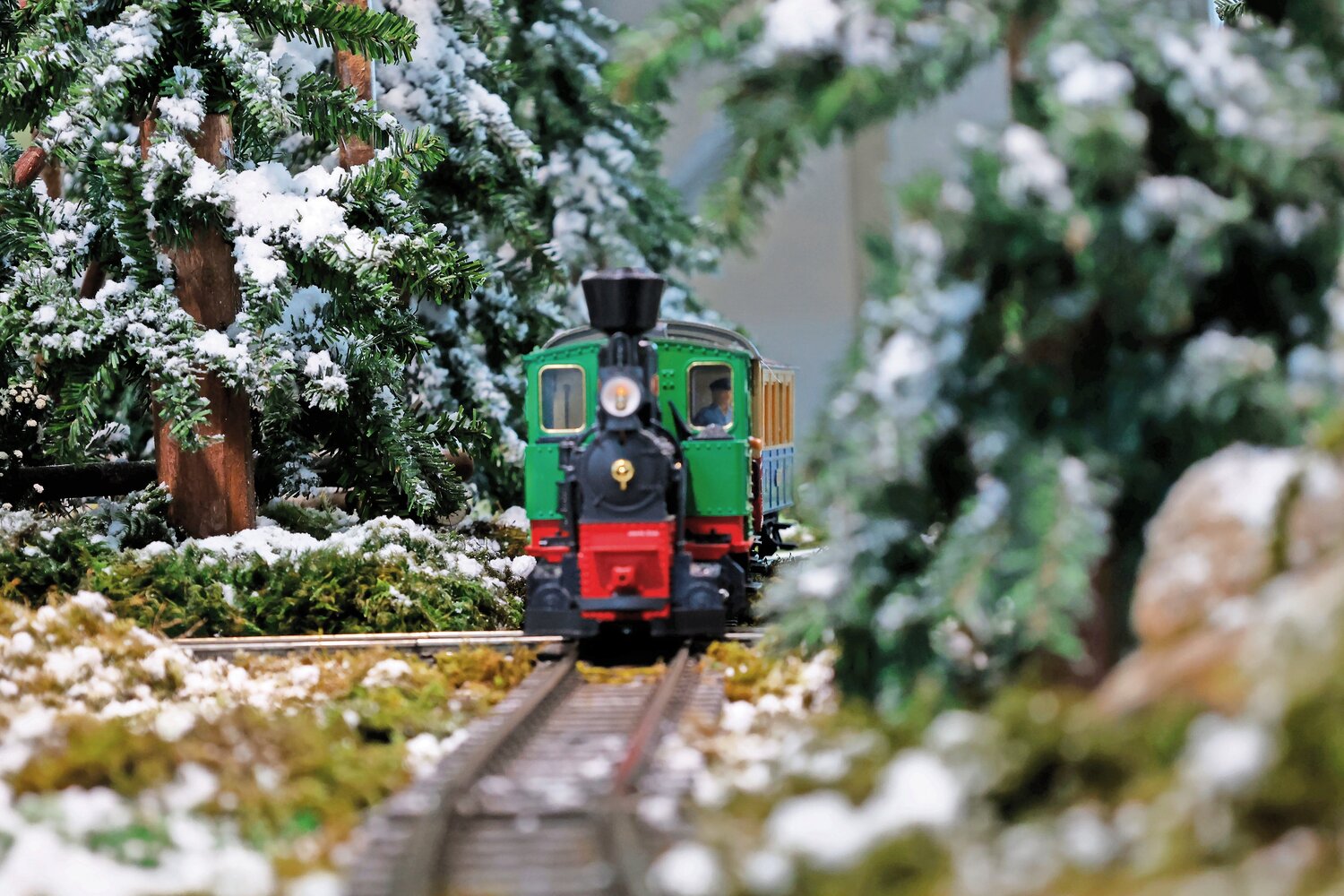


The New York Botanical Garden’s Holiday Train Show has returned for its 34th year, filling the glasshouse with the familiar hum of rail cars and the warm, earthy scents of cedar and pinecones.
The exhibition features nearly 200 botanical replicas of New York City landmarks, each crafted from leaves, bark, seeds and other plant material. This year, two striking additions stand out among the beloved buildings: the newly renovated Delacorte Theater and the Whitney Museum of American Art.
Visitors stepping into the Enid A. Haupt Conservatory will notice subtle shifts. The layout changes every season, but this year Central Park has been placed at the center of one of the largest galleries, creating a circular panorama that unfolds in every direction.
Belvedere Castle rises above model treetops, the Angel of the Waters glimmers above the Bethesda Fountain and the park’s wooden arches and bridges weave together in a miniature landscape that feels both familiar and new.
“We’re never really recreating one neighborhood totally faithfully,” Joanna Groarke, the Garden’s vice president for exhibitions and programming, told The Press “The goal is to offer a magical and playful view of New York City.”
Groarke, who has helped guide the exhibition for 15 seasons, said the intention this year was to deepen the sense of immersion and surprise. Buildings have been rotated, raised, or repositioned to create new vantage points, even for those who have visited every year since childhood.
“I hope that people are inspired by the inventive ways plants can be part of our lives,” she said. “We use them to build these miniature landscapes, but also to form the buildings themselves. It encourages people to take a second look at the natural world.”
Among the models drawing attention this year is the botanical recreation of the Delacorte Theater, long home to Shakespeare in the Park and newly reopened after a major renovation.
The model, made from bark including ash, locust and hickory, sits in the Central Park section of the show. It has been turned slightly to showcase its sculptural façade.
“That façade is such an important part of the new design that we wanted to highlight it,” Groarke said.
Across the Conservatory, the Whitney Museum’s downtown building appears for the first time. Its terraces and sharp angles have been translated into polished horse-chestnut bark, slender reeds and pieces of euonymus. Representatives from the Whitney, who toured the show during opening week, said the inclusion feels like a milestone.
“It’s really an honor to be recognized as an iconic building,” said Marcela Guerrero, the Whitney Museum’s Demartini family Curator. “Not every building in New York makes it into the Train Show.”
She pointed out a small but meaningful detail built into the miniature museum: lights embedded inside the structure that glow after dark.
“When it’s night, you’ll see it shimmering from within,” she said. “It resonates with the real experience of walking by the museum during our evening programs.”
Both new buildings were crafted by Applied Imagination, the Kentucky-based studio that has partnered with the Garden for more than three decades. Every replica, from Radio City Music Hall to the original Penn Station, is handmade from natural materials.
“With modern structures, it’s all about pattern and repetition,” said Laura Busse Dolan, president and CEO of Applied Imagination. “We make very choiceful decisions about how to celebrate that form in our style.”
Her team of 40 spent eleven days assembling the exhibition on-site after months of studio work.
“Imagine that an artist sat for a month to six months applying every single piece,” she said. “There are no shortcuts. These artists poured half their year into these buildings.”
Beyond the new additions, longtime visitors will still find the elements that have made the show a winter ritual for generations.
Trains glide over trestles and through tunnels, bridges arc above winding path and the outdoor mountainscape, added in recent years, provides a woodland extension glowing with more trains and winter plants. Some buildings appear in new arrangements, like Yankee Stadium, which sits in a different corner this season.
“Every year we move things around,” Groarke said. “Sometimes you see a building from a distance; other times you get to see all the details up close.”
The show also preserves memories of buildings no longer standing. For Groarke, the replica of the original Penn Station remains a personal favorite.
“My paternal grandfather was the station master in the old Penn Station,” she said. “So that building is important to our family.”
Whether during daytime visits or the illuminated after-dark Holiday Train Nights, this year’s exhibition blends craft, nostalgia, and the city’s architectural spirit into a single winding journey. And with two new landmarks joining the miniature skyline, the show adds another layer to the story it has been telling for more than three decades, one piece of bark and one passing train at a time.
“It’s really about the magic — about everyone feeling like a kid again,” Busse Dolan said. “This show has become a true family tradition for New York City.”
Keywords
NYBG Holiday Train Show 2024, New York Botanical Garden trains, Delacorte Theater model, Whitney Museum botanical replica, Enid A. Haupt Conservatory holiday, Applied Imagination NYC landmarks


