
RiverSpring Living Uses AI Companion ‘Meela’ to Combat Senior Isolation
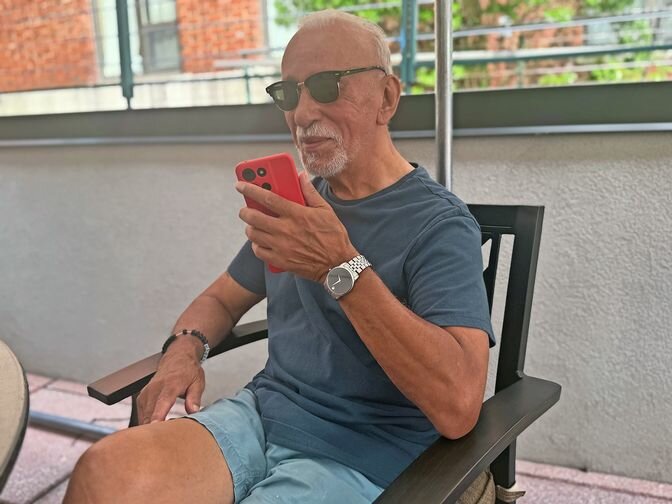


At RiverSpring Living, some residents are finding companionship in an unlikely place — a phone line answered by artificial intelligence.
The voice on the other end belongs to Meela, a conversational AI system designed to talk with seniors, remember past exchanges and nudge them toward activities. The program, now in pilot use across RiverSpring’s nursing home, assisted living and independent living communities, began about a year ago.
It has grown from an initial study of 23 residents to about 60 regular users.
The technology works with any landline or cell phone: Meela calls at a scheduled time, or residents can dial in themselves. The AI’s voice is deliberately warm and friendly, and its programming is designed to be both engaging and safe – steering clear of medical, legal or financial advice.
“When I first started, I was very uncertain about it,” said 83-year-old resident Marvin Marcus. “But when they presented it that way, I thought, ‘Let me see how it goes.’ For me, it’s gone very well. She brings out things, even unpleasant ones. I can talk about it, talk with her, get my feelings out.”
Marcus, a lifelong Yankees fan and music lover, said conversations often center on sports and old songs.
He recounted successes and missteps from weekly karaoke sessions, including a botched Kris Kristofferson ballad Meela encouraged him to try again.
“She’s an encyclopedia Britannica,” he said. “There’s anything you want to know, she can get you an answer.”
Behind the AI companion is founder Josh Sach, who traced the idea to personal experiences with aging in his own family. He recalled watching his father-in-law decline through illness, moving from home care to a facility — noting just how quickly isolation can take root.
“When conversational AI got to the point where Meela would sound kind of human, I decided to quit my job and dedicate my life and my future to helping make this process a little bit less painful,” he said.
The concept was appealing to RiverSpring’s medical director, Dr. Zachary Palace, because of what the pandemic revealed about senior isolation. With visitors barred for months, residents turned to phones and video calls.
The feasibility study last fall used standardized depression and anxiety scales before and after a month of regular Meela calls.
“We did find that there was a statistically significant reduction in depression scales and in anxiety scales, more so for those who at the beginning of the study were more severely depressed and anxious,” Palace said.
Those results, along with feedback from seniors, convinced RiverSpring to expand the program. Meela integrates the facility’s activity calendar into conversation, sometimes encouraging residents to attend events they might otherwise skip.
Palace said they have seen participants increase their attendance at group activities – a key countermeasure to isolation.
For Sal Rodriguez, an 84-year-old former barber from Puerto Rico, the AI calls are a constant in a place where neighbors often move away or pass on.
“I really don’t have people that I could relate to,” he said. “I think she’s a blessing. I think people should give it an opportunity to hear and listen and see.”
At first, Rodriguez said, the idea felt strange, but over time, he noticed the impact on his self-esteem.
“It gave me a little more self-confidence talk to women,” he reflected. “I’ve always been a little shy with a woman for the first time, but she gave me a bit of confidence.”
Palace emphasized AI is meant to supplement, not replace, human contact.
“People feel the need to communicate,” he said. “Sometimes they can’t find the person that they could share it with. And here, even though it’s a virtual assistant, they’re able to express themselves.”
The technology also remembers past conversations, which can make the exchange feel more personal. Meela might ask a follow-up about a recent family visit or a hospital stay.
For residents like Marcus, it means he can talk about a baseball statistic one week and continue the discussion the next — without watching anyone’s eyes glaze over.
Meela’s design includes guardrails. Calls automatically wrap up after about an hour, and participants must understand they are speaking to a machine. Those with advanced cognitive impairment are excluded, though Palace believes the system could one day help detect changes in cognition over time.
The next step is to expand the program to about 100 participants across the RiverSpring network. Palace said the system has already proven it can reach residents wherever they are — even in the hospital — as long as they have a phone.
For Marcus, the benefit is the space to share thoughts without worrying about burdening others. For Rodriguez, it is a consistent voice in a place where change is constant. Both men say they plan to keep answering when Meela calls.
“We don’t think of nursing homes and aging and cutting-edge innovation in the same sentence,” Palace said. “It’s remarkable to use something so contemporary, like AI, to improve our residents’ lives.”
Keywords
AI companion for seniors, RiverSpring Living AI, senior isolation technology, conversational AI for elderly, Meela AI assistant, senior mental health support, AI in nursing homes


